
Why information capability is important for sustainable agriculture
- mrpaulkotz
- Jan 21, 2025
- 2 min read
Updated: Jan 27, 2025
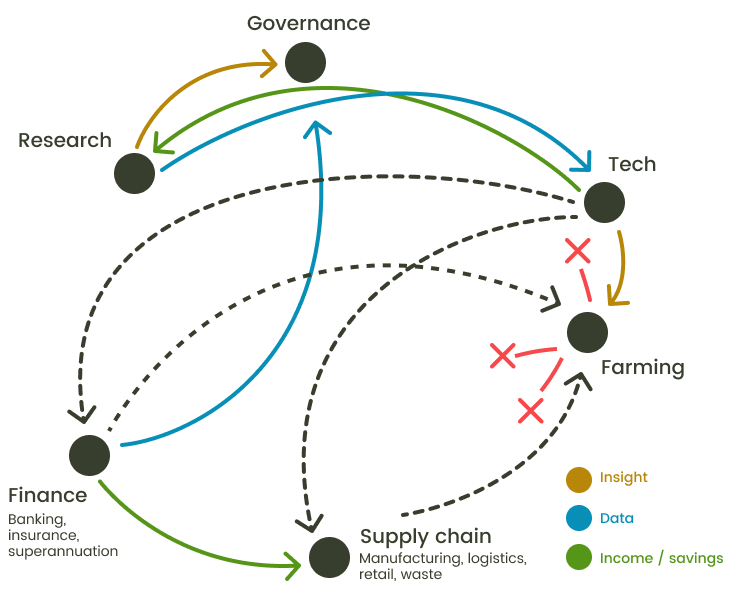
Achieving sustainability in agriculture relies on active participation from all players across the whole value chain. These participants form the 'Sustainable Agriculture Network' within the value chain, and they might be Farmers, Sustainability Managers, Procurement Managers, Operations, Human Resources and so on.
If the network is unblocked, value can be exchanged between parties for being able to demonstrate their sustainability. The successful exchange of value encourages participants to do more, bringing in more value and creating a virtuous cycle.

Unfortunately, right now (Early 2025) the Sustainable Agriculture Network is riddled with blockages, so participants (particularly Famers) aren't receiving the promised value. Causes of those blockages include:
Poor quality data
A lack of trust in sustainability claims being made
A lack of trust in parties who are asking for business data
A lack of understanding or consensus of sustainability topics (eg: greenhouse gas emissions)
The primary cause of these causes comes from a lack of information capability in participants.
For example, It's a common complaint that despite the variety of farm management software available, much of the data entered into those systems if low quality or non-existent. Farmers don't have time to enter data into systems, and that's if they have the data readily available
Here, 'information capability' means:
The ability to manage time effectively to create space for the work required
Knowing what support is available in doing the work
Knowledge of the systems they currently have in place

Comments